
I had been operating in a state of urgency trying to finish projects with overlapping deadlines. In my head fun and rest were a reward for when work is complete. I fell into a cycle of exhaustion and stress. Everything was rushing by. Where was my time going?
In line for coffee, I asked the universe to give me something to be grateful for, something sweet to ease my anxiety. Immediately, I stopped and became aware of my surroundings. I took a full breath for the first time in days. I realized I have money to buy myself a coffee. I have a car that got me here. The weather is cool. I have a new favorite song. I have the chance to work and improve my skills. I am healthy. I am loved.
I didn’t need to be given something to feel grateful- I already have so much. What I needed was to reset my nervous system.
Disclaimer: Urgency is not always bad, but when it is constant our bodies are overly stressed; neuroplasticity can rewire our brains to become accustomed the constant influx of cortisol. Having the ability to practice slowing down is a privilege, but if we are able to make the time to do so there are many benefits. The issues around a false sense of urgency can be expanded upon (as it is deeply ingrained in American culture and isolates minorities), but here is an introduction to my thoughts and research as it relates to health.
Capitalism thrives off of urgency causing individuals to constantly strive for productivity. We are taught the importance of time and begin to rush and multitask to meet the “immediate” demands of an email, text, task, etc. The idea that everything is high priority, needing quick and constant attention, can distract us from our ability to be present; mind and body become disconnected. Eventually, we may end up living on autopilot or stuck in fight or flight.
Stress on the Body:
A false sense of urgency triggers the same response as a real emergency; our body cannot differentiate between the different types of stress (ex: being chased by someone vs getting a work email and feeling like you have drop everything to respond right away.) Our hypothalamus signals the adrenal gland to release our stress hormones- cortisol and adrenaline- causing heart rate and blood pressure to increase, sped up breathing, and tense bodies.
Cortisol regulates our bodies stress response, but when the hormone level is elevated for an extended period, it becomes toxic and disrupts metabolic processes.
When brains prioritize performance (to get us out of danger), short-term memory function decreases. Constantly performing in this state can hinder our ability to make new memories or recall old ones. It also interferes with our ability to learn and retain new information. Excess cortisol can lead to cognitive impairment and mood disorders.
Eventually, after becoming fatigued and anxious, you may experience poor digestion and sleep, with a low functioning immune system too, because the nervous system is not regulated.
Take Away:
Constant urgency slows down our productivity (based on excess cortisol symptoms). We may get sick more often or no energy for tasks. It’s like leaving the house in a rush and forgetting something important you need for your errands; you have to delay the work which sets you back.
The long-term health effects can sound overwhelming but can be easily fixed with mindful practice!
Practices:
High cortisol often makes people emotionally reactive; practicing emotional intelligence is a great way to slow down. Pausing to consider outcomes and reflect on a situation allows us to respond thoughtfully and find alignment.
Plan out tasks and break them down into smaller sections to avoid functional freeze- or feeling stuck/paralyzed. Time management reduces stress and helps meet expectations.
Take a step back and analyze if something is genuinely time critical or life impacting. Society and habits may condition us to feel like something is urgent, when really it isn’t. Ask what we can change in this moment (is there a task that can be completed or a resolve to an issue?), and if there isn’t find a way to slow down and enjoy the present. We are not as behind as we think!
I have been prioritizing doing one task at a time, meditation, and taking deep breaths when I begin to rush myself. I am reframing my views, reminding myself errands or answering a text are not life or death; I have time. I plan my big tasks out so I can go slow and produce work I am proud of. I have goals and timelines, but I know there is time to accomplish them and that sometimes paths take a detour. These small practices help me think through things that feel urgent and stressful and I often realize it’s actually not a big deal.
Today, I woke up with a clear mind and felt grateful. I did my morning stretches, ending with meditation. I sat outside with my cat listening to the birds. The sun was hidden, and the humidity was mild. I felt present. I felt lucky. I went to the gym and took my time. I made a yummy meal and set myself up for the week ahead. Slow mornings make me feel like I am living.
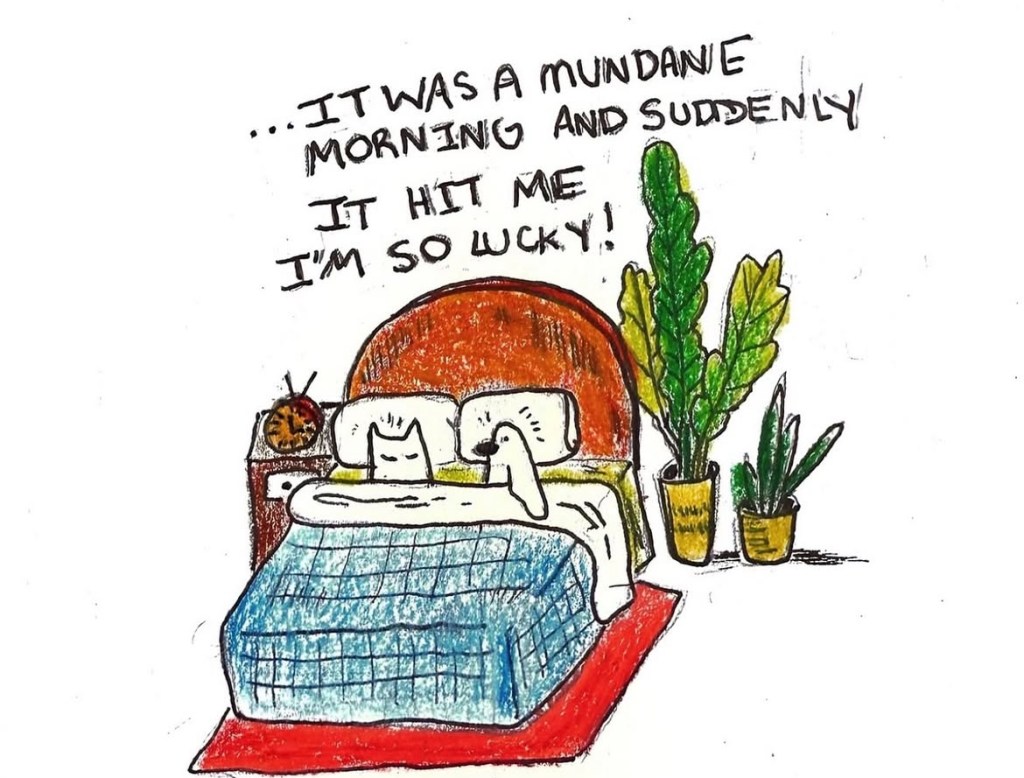
Art by SunlightAfterDark
 I Think, I Feel
Leave a comment