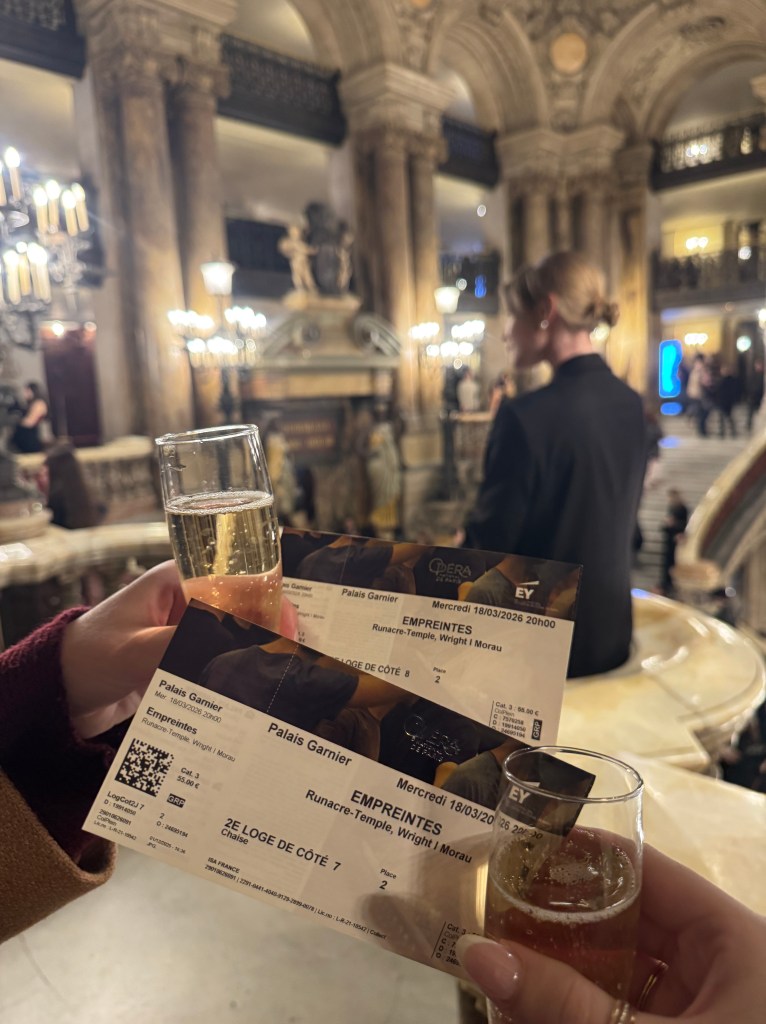
Paris was packed with inspiring moments, but attending the ballet engraved a deep excitement into me. Between acts and on the walk to the metro I was frantically typing notes into my phone so I would not forget a single moment of how image, light, and dance created a profound story; I asked all around me for their thoughts, so I had an excuse to ramble about my experience in return. It was invigorating.
Act 1: Arena created by Morgan Runacre-Temple and Jessica Wright
The ballet started with an experimental performance. Videography was incorporated into the choreography offering real time insight into the smaller elements that could not be seen from where you’re seated, altering the audience’s perception as we witness the minute changes of facial expressions, streams of sweat, and the details within the movement of each muscle.
To me, the piece was aligned with a psychological thriller. The score, by Mikael Karlsson, was not your traditional classical music, rather it offered moments of dark intensity through strings (possibly a quartet) that matched the flashing of red lights.
My interpretation of this piece was the anticipation of the audition process and the anxiety of being replaced. The costumes begin simplistic, like what one would wear to practice, though differ in style and color. However, each dancer’s shirt is labeled with a number- the lead being 81. They dance cohesively, yet almost individually- moving pieces of one whole. Slowly, dancers disappear off stage and return with matching clothes and marked with the number 81. As they become 81, the movements become mirrored, anticipated, and in sync. The videography brings us into the dancer’s perspective here and showcases a sense of worry. Are they all being molded into the same person, a clone of what the “perfect” dancer is?
There is a voice playing over the dancers in English, and I cannot remember all is says, but it repetitively asks about happiness and ends the piece with “NEXT!” as the lights go black.
Act 2: Étude by Spanish choreographer Marcos Morau
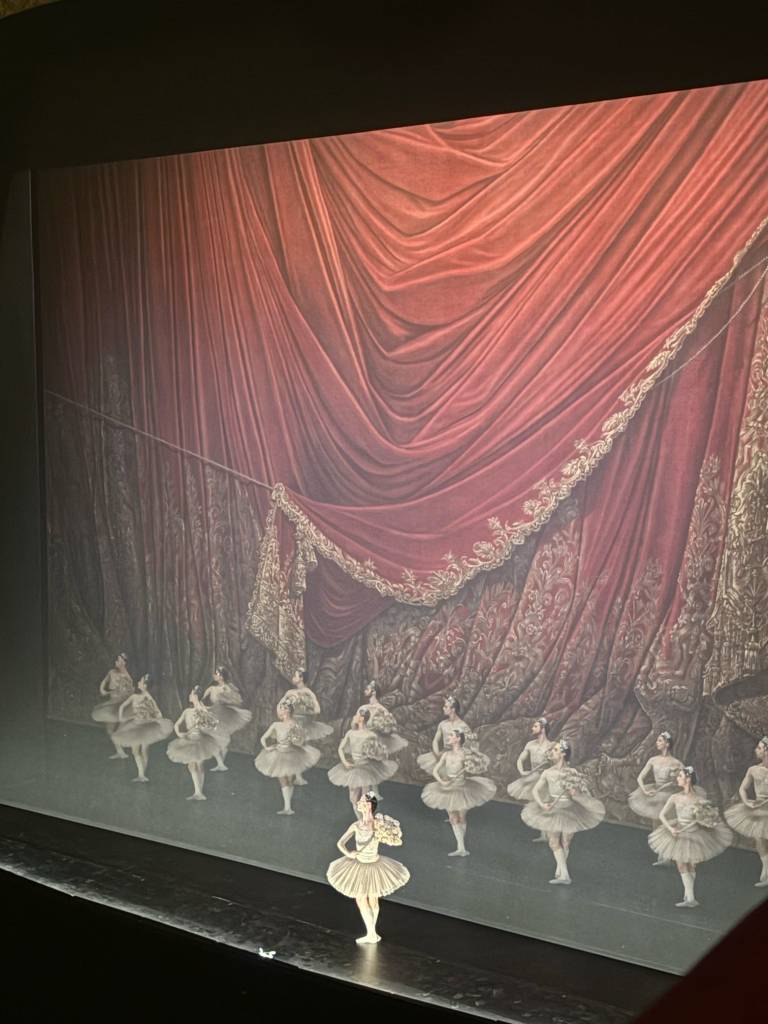
This piece began with no music while the lights were still on and the curtain down. The lead silently struts onto stage with a stiff stereotypical tutu and a bouquet of flowers. She stands in position with an almost pained smile. As the audiences notices her, the curtain slowly raises to reveal two lines of ballerinas behind her in the exact same position and costumes. The choreography begins and I immediately took notice of how in sync and more traditional the choreography was compared to the first act, in both movement and emotion.
Meshing into one line, the dancers disappear behind a wall and return on the other side of the stage creating the effect of a factory line of mass-produced dancers. Building off of act one, I interpreted this scene as realizing that everyone is trying to achieve the same dream. Do we become replicas of each other in that process? The lead steps up to the front; she stands in a spotlight and begins to contort her body in a way I never expected to see in ballet. Taking the lens of introspection, I viewed this as an expression of being broken down during the pursuit of one’s dreams.
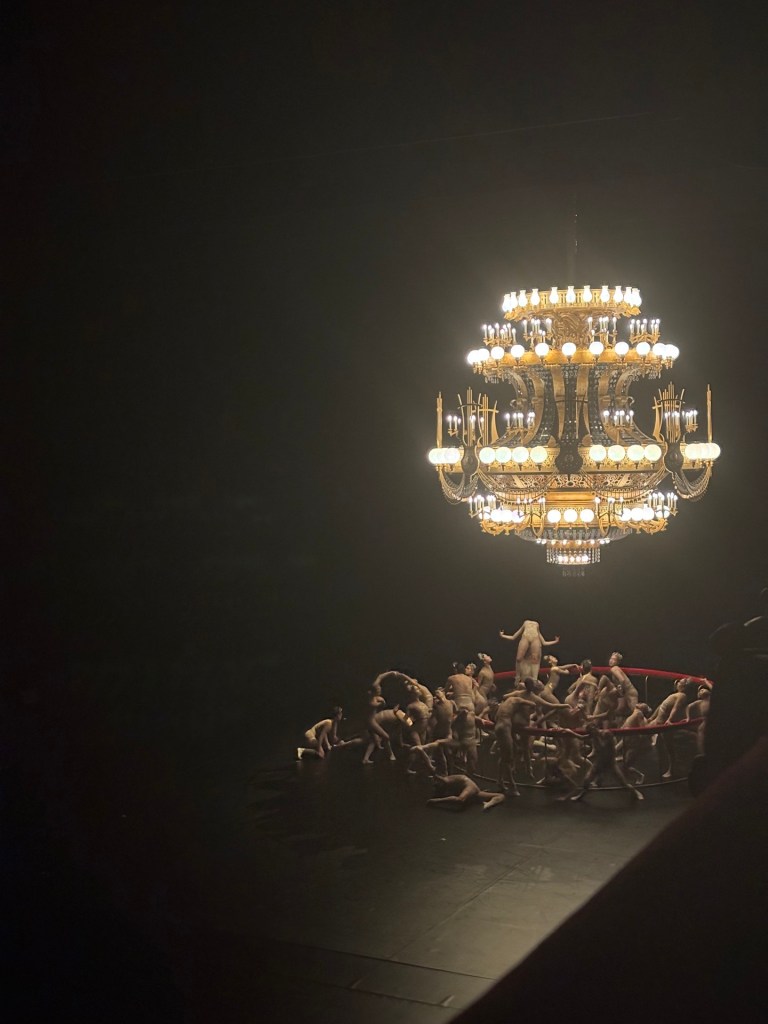
In the next scene a bar is revealed, and a little later a massive chandelier is lowered from the ceiling. We see a shift to community, sensuality, and the freedom of dance as the light hangs overhead; it offers a source of inspiration while the dancers worship it and reach out to touch it, but it is also the darkness of self-doubt as it begins to sway and flicker. Their dreams may be unstable, but passion is the greatest motivator. The red light returns as the dancers start to spin in tandem all over the stage in controlled chaos. I am not a dancer, so I contemplated if this is representative of the nature of practicing for a show.
End thoughts
I think there were many elements and intentions behind each piece, but as a whole the ballet felt like an introspective recollection of a ballerina’s experiences. Many people preferred one act over the other or could not find any connections between the two. I could not choose a favorite because to me they were one. Each took me on a different journey, but it would feel wrong, incomplete, for one to exist without the other.
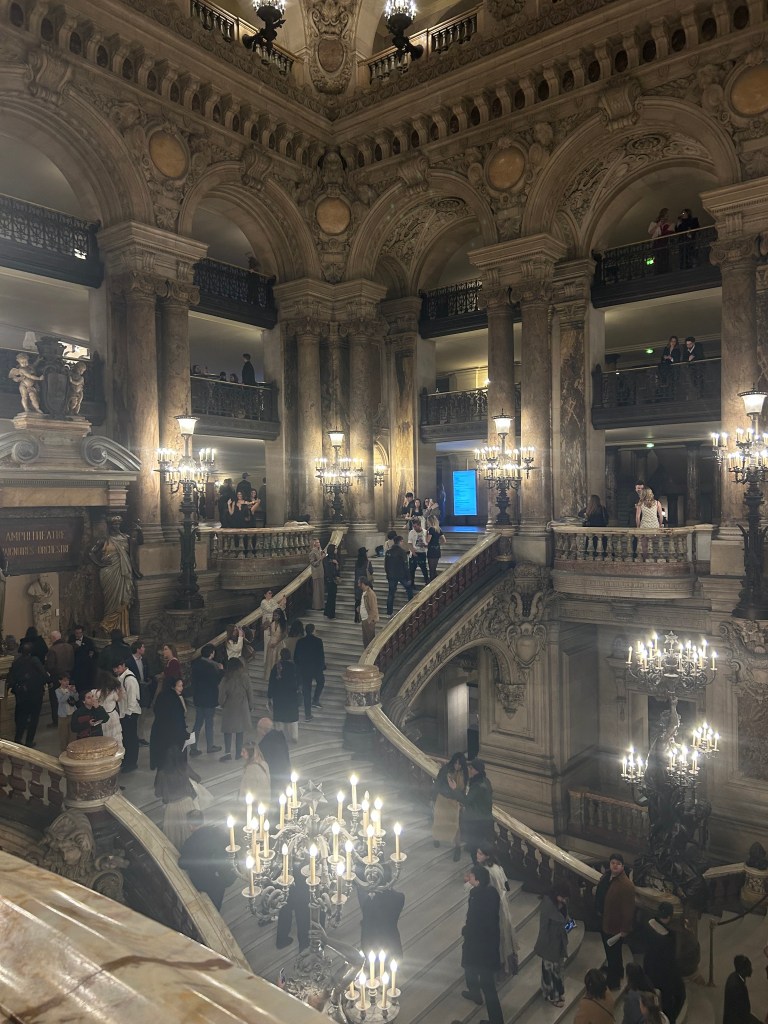
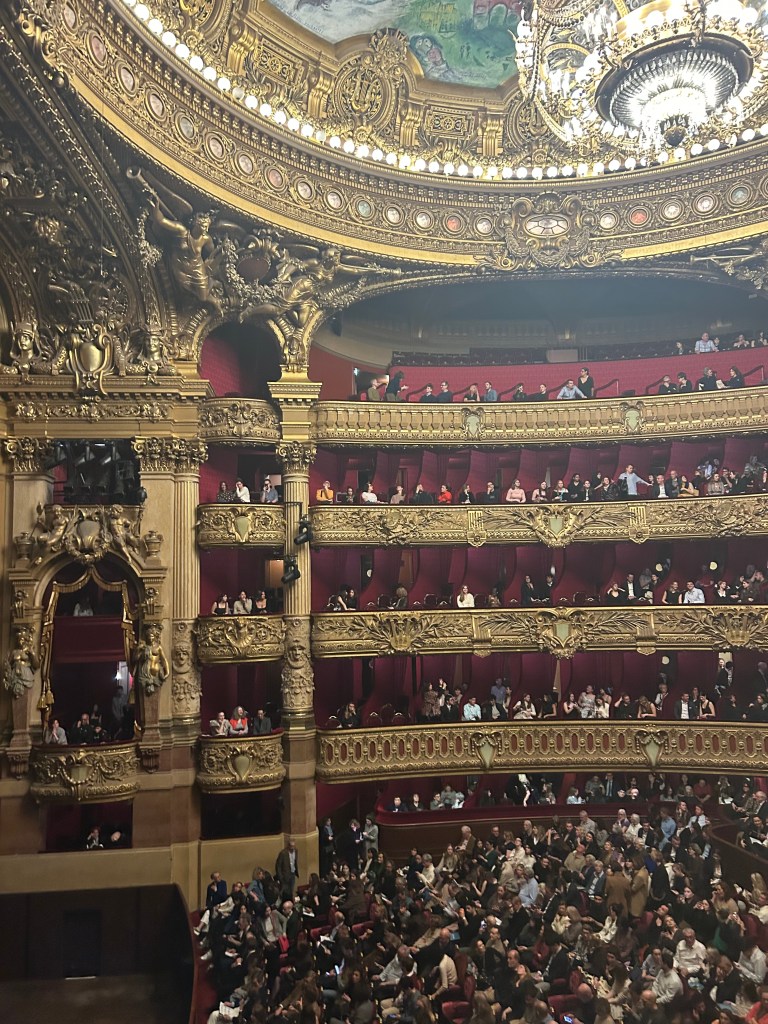
The beauty of art is having your own unique experience with it and allowing your own life to shape it. The opera house was gorgeous, and I admired how it was incorporated into the show. I went into the show without any expectations, and I could not be any more grateful for what I became a part of here.
 I Think, I Feel
Leave a comment